 EN
EN


Choosing the right voltage system for your Surron dirt bike is one of the most important decisions a rider or buyer will face. The voltage of a battery system directly shapes how a Surron dirt bike performs on trails, how long it runs between charges, and how much power it delivers under demanding off-road conditions. Whether you are a beginner exploring light trails or an experienced rider pushing a Surron dirt bike to its mechanical limits, understanding the difference between 48V and 72V matters deeply.
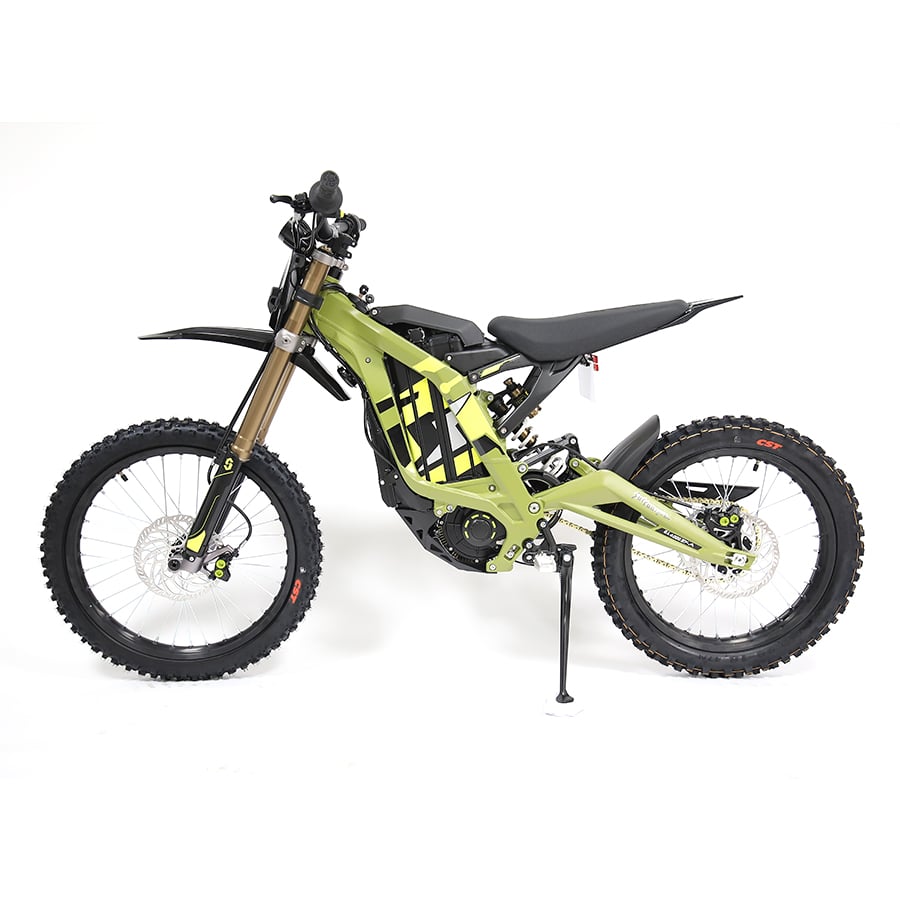
The Surron dirt bike platform has grown rapidly in the off-road electric motorcycle market, attracting riders who want a lightweight, agile, and emission-free ride. As more buyers consider upgrading or customizing their Surron dirt bike, the 48V versus 72V question keeps surfacing. This guide breaks down how each voltage system behaves, which scenarios favor one over the other, and what practical factors should influence your final choice when configuring a Surron dirt bike for real-world use.
Understanding Voltage in a Surron Dirt Bike Battery System
What Voltage Actually Controls
Voltage in a Surron dirt bike system determines the electrical potential that drives the motor. A higher voltage means more potential energy is available to produce torque and speed. On a Surron dirt bike, the battery voltage directly affects throttle response, peak power output, and how efficiently the motor operates under load. A 72V Surron dirt bike system pushes more energy through the motor windings at any given moment, resulting in stronger acceleration and higher top-end performance compared to a 48V setup.
Voltage also interacts with the motor controller. A Surron dirt bike running a 72V system typically uses a controller rated for higher current thresholds, which allows the entire drivetrain to handle more aggressive riding styles. In contrast, a 48V Surron dirt bike system operates within a lower energy window, which suits riders who prioritize range management and gentler power delivery over raw performance. Understanding this relationship is the first step toward choosing correctly for your Surron dirt bike.
Battery Capacity and Energy Storage
Voltage alone does not tell the whole story. On a Surron dirt bike, total energy storage is calculated by multiplying voltage by amp-hour capacity. A 48V 30Ah Surron dirt bike battery holds 1440 watt-hours, while a 72V 35Ah Surron dirt bike battery stores 2520 watt-hours — a dramatically larger energy reserve. This means a 72V Surron dirt bike can sustain higher power output for longer durations without depleting the pack as quickly under hard riding conditions.
Performance Differences Between 48V and 72V
Power Output and Riding Experience
A 72V Surron dirt bike delivers a noticeably sharper and more responsive ride. Riders who test both configurations consistently report that a 72V Surron dirt bike accelerates harder out of corners, climbs technical terrain with greater confidence, and holds speed across rough surfaces more consistently. The additional voltage feeds a more powerful motor output, which translates to real advantages when a Surron dirt bike is used on steep grades, deep sand, or demanding enduro-style tracks.
A 48V Surron dirt bike, by comparison, offers a smoother and more forgiving power curve. For younger riders, newer off-road enthusiasts, or anyone using a Surron dirt bike on flat recreational trails, 48V provides ample performance without overwhelming the rider. The lower voltage also reduces the risk of aggressive power spikes that could cause handling difficulties on a light-framed Surron dirt bike. Matching voltage to skill level and terrain type is essential for getting the best experience from any Surron dirt bike configuration.
Heat Management and Component Stress
Higher voltage systems generate more heat under sustained loads. A 72V Surron dirt bike must be equipped with a motor controller and battery management system capable of handling elevated thermal output. If a Surron dirt bike is upgraded to 72V without proper component matching, the controller and battery cells can degrade faster. Riders who plan to run a Surron dirt bike at high performance levels regularly should ensure that the entire electrical system is rated for 72V operation, not just the battery pack.
Choosing the Right Voltage for Your Riding Style
Factors That Favor a 72V Surron Dirt Bike
If you ride a Surron dirt bike on technical trails, motocross-style tracks, or any terrain requiring sustained high power, a 72V system is the stronger choice. Riders who compete, who carry heavier loads, or who frequently ride a Surron dirt bike in hilly or mountainous regions will benefit most from the expanded energy capacity and power headroom that 72V provides. The Surron Light Bee at 72V with a 35Ah pack and 10000W motor output represents a well-matched system that extracts the full performance potential of the Surron dirt bike platform.
Long-range riding also favors a 72V Surron dirt bike when configured with a high-capacity pack. More watt-hours in the battery means fewer stops and more time on the trail. If your primary concern with a Surron dirt bike is covering distance without sacrificing performance, the 72V configuration offers the most future-proof setup available today.
Factors That Favor a 48V Surron Dirt Bike
A 48V Surron dirt bike remains a practical choice for casual riders, beginners, and anyone operating a Surron dirt bike within controlled environments such as private land or beginner-friendly trails. The lower voltage system is lighter, often more affordable, and easier to maintain for riders who do not require peak performance output. A 48V Surron dirt bike also charges faster in many configurations, which suits riders who prefer shorter session-to-charge cycles over maximum range or power.
Weight-sensitive builds also benefit from a 48V Surron dirt bike setup. Since a 48V battery pack is typically lighter than its 72V counterpart, a Surron dirt bike running 48V handles differently — often feeling more nimble and easier to maneuver for smaller or younger riders. Deciding between the two should always start with an honest assessment of how and where the Surron dirt bike will actually be used.
FAQ
Can I upgrade my 48V Surron dirt bike to 72V later?
Yes, many Surron dirt bike owners upgrade from 48V to 72V, but it requires replacing not just the battery but also the motor controller, throttle calibration, and sometimes the motor itself. A Surron dirt bike upgraded to 72V without matching controller specifications risks premature component failure. Always consult a qualified technician or verify full system compatibility before upgrading your Surron dirt bike voltage.
Will a 72V Surron dirt bike wear out faster than a 48V version?
Not necessarily. A properly matched 72V Surron dirt bike with quality components will have a comparable service life to a 48V version. The key factor is whether all parts on the Surron dirt bike are rated for the higher voltage. A 72V Surron dirt bike that is maintained correctly and not consistently run at maximum load will perform reliably over many riding hours.
Which voltage is better for a Surron dirt bike used by younger riders?
A 48V Surron dirt bike is generally more appropriate for younger or less experienced riders. The power output is more manageable, and the risk of sudden aggressive acceleration is lower. As rider skill develops and trail demands increase, transitioning to a 72V Surron dirt bike becomes a natural next step. Always match the Surron dirt bike voltage to both the rider's experience level and the riding environment.