 EN
EN


The Surron Ultra Bee has rapidly become a benchmark in the electric off-road motorcycle segment, attracting riders who demand high performance in challenging terrain. One critical aspect that often goes underexamined is how the Surron Ultra Bee weight distribution impacts jumping performance and mid-air stability. Weight distribution is not merely a technical specification—it fundamentally determines how predictably a motorcycle behaves during takeoff, flight, and landing phases of jumps. For riders pushing the limits on motocross tracks, technical trails, or freestyle jump courses, understanding the relationship between center of gravity, mass placement, and aerial control is essential for both performance optimization and safety.
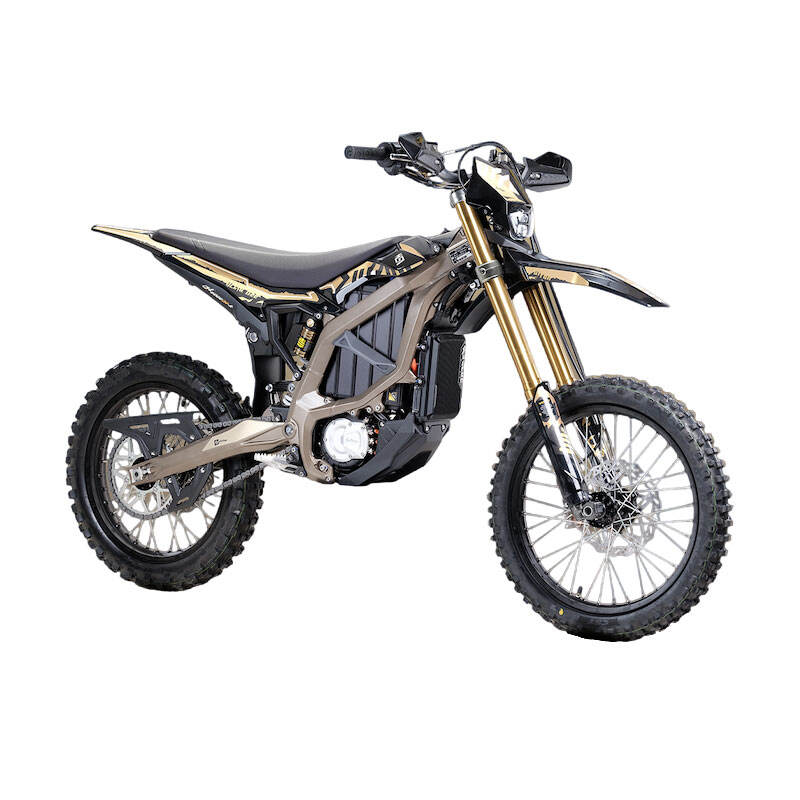
Jump stability in motorcycles depends on a complex interplay of factors including chassis geometry, suspension kinematics, power delivery characteristics, and crucially, how mass is distributed along the longitudinal and vertical axes of the machine. The Surron Ultra Bee employs a centralized battery placement strategy combined with a purposefully designed frame architecture that aims to achieve a balanced front-to-rear weight ratio. This engineering approach directly influences how the motorcycle rotates in flight, responds to rider input during aerial maneuvers, and maintains composure when landing at various angles. This article examines whether the Surron Ultra Bee weight distribution genuinely delivers measurable improvements in jump stability, exploring the underlying physics, practical riding implications, and comparative context within electric motorcycle design.
Understanding Weight Distribution Fundamentals in Jump Dynamics
The Physics of Motorcycle Rotation During Flight
When a motorcycle leaves the ground during a jump, it becomes a projectile subject to gravitational forces and rotational momentum established at takeoff. The Surron Ultra Bee weight distribution plays a decisive role in determining the angular momentum generated as the rear wheel loses ground contact. A motorcycle with rear-biased weight will naturally pitch forward during flight due to the rotation initiated by the rear suspension extending and the rear wheel continuing to spin. Conversely, front-heavy configurations can cause the nose to drop excessively, making landings steep and potentially dangerous. The ideal weight distribution maintains a neutral rotational tendency, allowing riders to make fine adjustments using throttle input and body positioning rather than fighting against inherent imbalance.
The moment of inertia—resistance to rotational acceleration—is directly proportional to how mass is distributed relative to the center of gravity. In the Surron Ultra Bee, the battery pack represents the single largest mass component, and its placement low and central within the frame minimizes the moment of inertia around the pitch axis. This configuration means less energy is required to initiate or correct rotational changes mid-air, giving riders more responsive control. Additionally, the centralized mass reduces the motorcycle's tendency to continue rotating once movement begins, making it easier to stabilize the bike in flight. This physical principle explains why Surron Ultra Bee weight distribution is specifically engineered to keep heavy components clustered near the geometric center rather than distributed toward the extremities.
Center of Gravity Position and Its Impact on Takeoff Behavior
The vertical and longitudinal position of the center of gravity directly affects how a motorcycle responds during the compression and extension phases of jump takeoff. The Surron Ultra Bee weight distribution places the center of gravity relatively low due to the floor-mounted battery architecture, which improves stability during the approach phase and reduces the likelihood of premature nose lift. A lower center of gravity also enhances traction on the takeoff face by maintaining more consistent ground contact as suspension compresses under load. This characteristic is particularly valuable on steep or uneven jump faces where maintaining control through the transition is critical for achieving the desired launch angle.
Longitudinal weight distribution—the front-to-rear balance—determines how aggressively the motorcycle wants to rotate upon leaving the ground. The Surron Ultra Bee achieves approximately a fifty-fifty weight distribution between front and rear wheels when a rider is in neutral riding position. This balance means that as the rear suspension rebounds and the rear wheel loses contact, the torque reaction from the spinning rear wheel is counteracted by sufficient forward weight to prevent excessive rotation. Riders report that the Surron Ultra Bee maintains a flatter trajectory in flight compared to machines with more rearward weight bias, requiring less corrective throttle input to keep the front end level. This neutral behavior reduces cognitive load on the rider and allows more focus on landing preparation and subsequent maneuvers.
Dynamic Weight Transfer and Suspension Interaction
Weight distribution is not static during motorcycle operation—it shifts dynamically based on acceleration, braking, and suspension movement. The Surron Ultra Bee weight distribution interacts with suspension geometry to manage these dynamic transfers effectively. During jump approach, aggressive acceleration shifts weight rearward, which can be beneficial for maintaining rear wheel traction but may also preload the suspension in ways that affect takeoff characteristics. The Ultra Bee's suspension tuning is calibrated to work with its weight distribution, providing progressive damping that resists bottoming while still allowing sufficient travel to absorb takeoff forces without harsh rebound that would destabilize the motorcycle.
The relationship between sprung weight—mass supported by the suspension—and unsprung weight—wheels, brakes, and suspension components—also affects jump stability. The Surron Ultra Bee weight distribution benefits from relatively low unsprung weight due to lightweight wheel assemblies and compact brake systems. This allows the suspension to respond more quickly to terrain changes during takeoff and landing, maintaining better ground contact and reducing the likelihood of deflection that could alter the motorcycle's trajectory unpredictably. The centralized placement of heavy components as sprung weight means that suspension movement does not dramatically shift the center of gravity, contributing to more predictable handling throughout the jump sequence.
Surron Ultra Bee Specific Weight Distribution Architecture
Battery Placement Strategy and Mass Centralization
The Surron Ultra Bee employs a 72-volt, 60-ampere-hour battery system that constitutes the majority of the motorcycle's mass. This battery is positioned low in the chassis, directly beneath the rider's seating position and between the frame rails. This strategic placement is central to understanding Surron Ultra Bee weight distribution advantages in jumping scenarios. By keeping the heaviest component as close to the geometric center of the motorcycle as possible, Surron engineers have minimized the polar moment of inertia, which is the resistance to rotation around the vertical axis passing through the center of gravity. This design choice means that when the motorcycle is airborne, it requires less rider input to adjust pitch angle, and corrections happen more quickly and predictably.
The low battery placement also contributes to a lower overall center of gravity compared to motorcycles with higher-mounted fuel tanks or battery packs. This lower center of gravity improves stability not only during jumping but also during aggressive cornering and technical terrain navigation. For jump stability specifically, the lower center of gravity means that the motorcycle is less prone to tip over during landing if the wheels touch down at slightly different heights or if the landing surface is uneven. The Surron Ultra Bee weight distribution creates a more forgiving platform that tolerates imperfect landings better than motorcycles with higher centers of gravity, which can amplify small landing errors into loss of control scenarios.
Front-to-Rear Balance and Component Layout
Achieving optimal front-to-rear weight balance in an electric motorcycle presents unique challenges because there is no heavy engine to use as a counterweight. The Surron Ultra Bee addresses this through careful component layout, positioning the motor relatively forward in the chassis while using the battery's central placement to balance the overall distribution. The result is a weight distribution that approaches the ideal fifty-fifty split between front and rear axles when the rider is seated in a neutral position. This balance is crucial for jump stability because it prevents the natural tendency for the motorcycle to either nose-dive or loop out during flight.
The motor placement in the Surron Ultra Bee also affects weight distribution in subtle but important ways. By mounting the motor forward and low, the motorcycle gains some forward weight bias that helps prevent the rear end from wanting to come around during aggressive acceleration on jump faces. However, this forward bias is not excessive—it is carefully calibrated so that when combined with the central battery placement, the overall Surron Ultra Bee weight distribution remains neutral. This engineering balance allows riders to use throttle input effectively to adjust pitch during flight without fighting against strong inherent rotational tendencies. Experienced riders note that the Ultra Bee responds predictably to throttle adjustments in the air, allowing precise control over nose height and landing attitude.
Frame Design and Structural Mass Distribution
The frame structure of the Surron Ultra Bee contributes significantly to overall weight distribution beyond simply serving as a mounting platform for components. The frame uses a perimeter design with strategic reinforcement in high-stress areas, which adds mass where it is structurally necessary while keeping non-critical areas lightweight. This approach to frame design ensures that the Surron Ultra Bee weight distribution benefits from mass placed close to the center of the motorcycle rather than at the extremities. The frame rails are wider and more robust near the battery mounting area, concentrating structural mass centrally where it contributes positively to rotational inertia characteristics.
The subframe and rear section of the Surron Ultra Bee are constructed to be relatively lightweight, which prevents excessive rearward weight bias that would make the motorcycle want to rotate excessively during jumps. This lightweight rear end also improves suspension performance by reducing the sprung weight that the rear shock must control, allowing more precise damping and better maintenance of ground contact during landing. The overall frame design philosophy prioritizes central mass concentration, which is a key principle in achieving the favorable Surron Ultra Bee weight distribution that enhances jump stability. This design approach represents a fundamental understanding of how mass distribution affects dynamic motorcycle behavior in off-road environments.
Practical Jump Performance Implications
Takeoff Predictability and Launch Control
The practical benefit of Surron Ultra Bee weight distribution becomes immediately apparent during the takeoff phase of jumping. Riders consistently report that the Ultra Bee launches predictably from jump faces, maintaining the intended trajectory without unexpected pitch changes. This predictability stems from the balanced weight distribution that prevents the motorcycle from wanting to wheelie excessively or compress the front suspension disproportionately as power is applied. The centralized mass means that weight transfer during acceleration is gradual and controllable, allowing riders to modulate throttle input precisely to achieve the desired launch angle without fighting against strong rotational forces.
Launch control is particularly important on variable jump faces where the takeoff angle or surface conditions may not be ideal. The Surron Ultra Bee weight distribution provides a stable platform that tolerates minor variations in approach speed or body position without dramatic changes in takeoff behavior. This forgiveness is valuable for riders who are still developing jumping skills or who are encountering unfamiliar terrain. The neutral weight balance means that small corrections in rider position or throttle input produce proportional changes in motorcycle behavior rather than exaggerated responses that could lead to loss of control. This characteristic makes the Ultra Bee accessible to intermediate riders while still providing the precision that advanced riders demand for technical jumping scenarios.
Mid-Air Control and Throttle Response
Once airborne, the Surron Ultra Bee weight distribution continues to influence motorcycle behavior through its effect on rotational inertia and response to throttle input. Electric motorcycles have an advantage in mid-air control because the motor can deliver instant torque without the lag associated with internal combustion engines. The Ultra Bee leverages this advantage, and the balanced weight distribution ensures that throttle-induced rotation is predictable and proportional. When a rider applies throttle in the air, the spinning rear wheel creates a gyroscopic effect and reaction torque that causes the motorcycle to rotate forward—raising the nose. The Surron Ultra Bee weight distribution allows this rotation to occur smoothly without excessive speed, giving riders precise control over pitch angle.
The centralized mass concentration in the Surron Ultra Bee also means that the motorcycle responds quickly to body position changes while airborne. Shifting weight forward or rearward has a more immediate effect on pitch angle because there is less rotational inertia to overcome compared to motorcycles with mass distributed toward the extremities. This responsiveness allows riders to make fine adjustments using subtle body movements, which is particularly useful for situations where throttle control alone is insufficient or when preparing for difficult landing surfaces. The combination of electric motor responsiveness and optimal Surron Ultra Bee weight distribution creates a highly controllable platform for aerial maneuvers, whether executing simple jumps or complex freestyle tricks.
Landing Stability and Impact Absorption
The landing phase of a jump is where weight distribution has perhaps its most critical impact on stability and safety. The Surron Ultra Bee weight distribution contributes to landing stability by maintaining a low center of gravity and balanced front-to-rear weight that helps the motorcycle absorb impact forces evenly. When both wheels touch down simultaneously or near-simultaneously, the centralized mass means that the motorcycle is less likely to experience excessive pitching motion that could lead to loss of control. The low center of gravity also reduces the leverage effect that can cause the motorcycle to tip over if the wheels land on uneven surfaces or at slightly different heights.
Impact absorption during landing is enhanced by the Surron Ultra Bee weight distribution working in concert with suspension design. The balanced weight ensures that both front and rear suspension systems receive proportional loading during landing, allowing each end to compress and rebound in a coordinated manner. This coordination prevents the common problem of one end bottoming out while the other remains underutilized, which can lead to harsh landings and loss of control. Riders note that the Ultra Bee feels planted and composed immediately after landing, allowing them to transition quickly into the next corner or obstacle without needing to pause and regain composure. This characteristic is particularly valuable in racing or aggressive trail riding where maintaining momentum through technical sections is essential for competitive performance.
Comparative Context and Design Trade-offs
Electric Versus Combustion Engine Weight Distribution Differences
Comparing Surron Ultra Bee weight distribution to traditional combustion-engine motorcycles reveals fundamental differences in design approach and resulting handling characteristics. Combustion motorcycles typically have significant mass concentrated in the engine and fuel tank areas, which are positioned relatively high and forward in the chassis. This configuration creates a forward weight bias that can be advantageous for front-end traction during braking but may cause the nose to drop excessively during jumps if not actively managed by the rider. The Surron Ultra Bee, with its low and centralized battery placement, achieves a more neutral balance that requires less corrective input during aerial phases.
The absence of a fuel tank in the Surron Ultra Bee also affects weight distribution dynamics during extended riding sessions. Combustion motorcycles experience shifting weight distribution as fuel is consumed, with the motorcycle becoming lighter and more front-biased as the tank empties. This changing balance can subtly alter jump behavior over the course of a ride, requiring riders to adapt their technique. The Surron Ultra Bee weight distribution remains constant regardless of state of charge because battery weight does not change significantly during discharge. This consistency means that jump technique remains the same throughout a riding session, allowing riders to develop muscle memory and confidence without needing to compensate for changing motorcycle characteristics.
Weight Distribution Versus Overall Mass Considerations
While the Surron Ultra Bee weight distribution is optimized for jump stability, it is important to distinguish between weight distribution and overall mass. The Ultra Bee weighs approximately one hundred and ninety pounds without a rider, which is competitive with similar off-road motorcycles but still represents significant mass that must be controlled during jumping. Optimal weight distribution reduces the difficulty of controlling this mass but does not eliminate the physical challenges associated with heavier motorcycles. Lighter motorcycles with poor weight distribution may still be easier to maneuver in certain scenarios simply because there is less total mass to control, even though the distribution is less favorable.
The Surron Ultra Bee represents a balance between achieving sufficient structural strength, battery capacity, and motor power while maintaining manageable weight. The engineering challenge was to distribute this necessary mass optimally rather than simply minimizing total weight at the expense of performance or durability. The resulting Surron Ultra Bee weight distribution provides advantages in jump stability that partially offset the disadvantages of higher total mass compared to smaller or less powerful motorcycles. For riders who prioritize power and range alongside handling characteristics, this trade-off represents a reasonable compromise that delivers strong overall performance across diverse riding conditions.
Suspension Tuning and Weight Distribution Interaction
The effectiveness of Surron Ultra Bee weight distribution in improving jump stability depends significantly on appropriate suspension tuning that complements the mass distribution characteristics. Suspension spring rates, damping curves, and ride height all interact with weight distribution to determine final handling behavior. The Ultra Bee's suspension is factory-tuned to work with its specific weight distribution, providing progressive damping that prevents bottoming while maintaining compliance over rough terrain. This tuning allows the suspension to support the motorcycle's weight during compression phases of jumping without excessive harshness that would compromise control.
However, suspension tuning preferences vary based on rider weight, skill level, and intended use. The same Surron Ultra Bee weight distribution may feel different to riders of varying sizes because the combined system of rider and motorcycle weight changes the dynamic characteristics. Lighter riders may find the factory suspension too firm, causing the motorcycle to feel skittish over jumps because the suspension does not compress sufficiently to absorb takeoff forces. Heavier riders may experience excessive suspension travel usage that reduces control authority. Optimal jump stability requires matching suspension setup to rider weight while leveraging the inherent advantages of the Ultra Bee's weight distribution. Professional riders often customize suspension settings to achieve the precise balance that maximizes the benefits of the motorcycle's design.
Rider Technique and Weight Distribution Synergy
Body Position Optimization for Jumping
Even with optimal Surron Ultra Bee weight distribution, rider technique remains the dominant factor in achieving stable, controlled jumps. The motorcycle's weight distribution provides a favorable platform, but riders must understand how to position their body to work with these characteristics rather than against them. During jump approach, riders should maintain a neutral standing position with weight centered over the footpegs, which aligns their body mass with the motorcycle's center of gravity. This alignment maximizes the benefits of the Ultra Bee's balanced weight distribution by keeping the combined rider-motorcycle system stable and predictable.
As the motorcycle transitions from ground to air, rider body position becomes the primary tool for fine-tuning pitch angle. The Surron Ultra Bee weight distribution makes this adjustment easier because the motorcycle's neutral rotational tendency means small changes in rider position produce proportional changes in attitude. Moving forward on the seat or leaning the torso toward the handlebars shifts the combined center of gravity forward, helping to prevent the rear end from rising excessively. Conversely, shifting weight rearward can help lift the front end if the motorcycle is nose-heavy during flight. The responsive nature of the Ultra Bee's weight distribution means these adjustments are effective and immediate, giving riders precise control authority throughout the aerial phase.
Throttle Control Techniques During Flight
Throttle control is the second primary tool riders use to manage motorcycle attitude during jumps, and the Surron Ultra Bee weight distribution characteristics influence how throttle input affects behavior. Applying throttle while airborne causes the rear wheel to spin faster, creating reaction torque that rotates the motorcycle forward and raises the nose. The balanced weight distribution of the Ultra Bee means this rotation happens smoothly and proportionally to throttle input, without sudden or exaggerated movements that could overcorrect the attitude. This predictability allows riders to use small throttle blips to make precise adjustments rather than needing aggressive inputs that might destabilize the motorcycle.
The instant torque delivery of the electric motor in the Surron Ultra Bee enhances throttle control effectiveness compared to combustion engines that have throttle lag. However, this immediacy also means that riders must develop refined throttle sensitivity to avoid over-rotating the motorcycle during flight. The Surron Ultra Bee weight distribution helps manage this challenge by ensuring that rotational response is proportional even with instant power delivery. Experienced riders report that the combination of electric motor responsiveness and neutral weight balance creates a highly intuitive jumping platform where throttle input produces exactly the expected result. This intuitive behavior reduces the learning curve for riders transitioning from combustion motorcycles and allows faster progression in jumping skills.
Landing Preparation and Impact Management
As the motorcycle descends toward landing, the Surron Ultra Bee weight distribution continues to provide advantages through its influence on how the motorcycle responds to pre-landing adjustments. Skilled riders prepare for landing by ensuring the motorcycle is in the appropriate attitude—typically with both wheels level or the rear wheel slightly lower to absorb initial impact. The balanced weight distribution makes it easier to achieve this attitude because the motorcycle naturally tends toward level flight without strong rotational biases that must be actively countered. This characteristic is particularly valuable when landing on downslopes or uneven surfaces where precise attitude control is essential for maintaining stability.
During the actual impact phase, the low center of gravity resulting from the Surron Ultra Bee weight distribution helps keep the motorcycle grounded and stable. The centralized mass means that impact forces are absorbed near the geometric center of the motorcycle, reducing the tendency for the front or rear end to bounce excessively or for the motorcycle to tip sideways. Riders should maintain a neutral body position during impact, allowing the suspension to compress fully while keeping weight centered over the footpegs. The Ultra Bee's weight distribution ensures that this neutral position is effective, with the motorcycle tracking straight and stable even on rough or loose landing surfaces that might destabilize motorcycles with less optimal mass placement.
FAQ
How does the Surron Ultra Bee's battery placement specifically improve jump stability?
The Surron Ultra Bee's battery is mounted low and centrally in the chassis, which lowers the overall center of gravity and centralizes the majority of the motorcycle's mass. This placement minimizes rotational inertia around the pitch axis, meaning the motorcycle requires less force to adjust its attitude in the air and is less prone to continuing rotation once it begins. The low center of gravity also improves stability during landing by reducing the leverage that can cause the motorcycle to tip over on uneven surfaces. This centralized battery placement is the primary architectural feature that enables the favorable weight distribution characteristics that enhance jump performance.
Can rider weight significantly alter the jumping benefits of the Ultra Bee's weight distribution?
Rider weight does affect the combined center of gravity and total system mass, which can influence how the Surron Ultra Bee behaves during jumps. Heavier riders shift the center of gravity higher and may cause more suspension compression, potentially using more travel and reducing control authority. Lighter riders may find that the suspension does not compress sufficiently, making the motorcycle feel harsh over jumps. However, the fundamental advantages of the Ultra Bee's weight distribution—neutral rotational tendency and centralized mass—remain beneficial regardless of rider weight. Optimal performance for all rider sizes typically requires suspension tuning adjustments to accommodate the specific combined system weight while preserving the inherent benefits of the motorcycle's design.
Does the Surron Ultra Bee's weight distribution make it suitable for beginners learning to jump?
The Surron Ultra Bee weight distribution characteristics do provide advantages that can benefit beginning jumpers, particularly the predictable behavior and neutral rotational tendency that reduce the likelihood of dramatic over-rotation or nose-diving. However, the motorcycle's overall weight and power level mean it is not specifically designed as a beginner machine. Riders new to jumping should develop fundamental skills on smaller, lighter motorcycles before progressing to the Ultra Bee. For intermediate riders advancing their jumping skills, the Ultra Bee's weight distribution offers a forgiving platform that tolerates minor technique errors while still providing the performance needed for progression to more advanced maneuvers.
How does suspension setup interact with weight distribution to affect jump stability?
Suspension setup and weight distribution work together as an integrated system to determine jump behavior. The Surron Ultra Bee's weight distribution provides the foundational balance, but suspension spring rates and damping must be appropriately tuned to support this weight and control its movement during compression and rebound cycles. If suspension is too soft, the motorcycle will use excessive travel and may bottom out during hard landings, compromising the benefits of good weight distribution. If too firm, the suspension will not compress adequately to absorb forces, making the motorcycle feel harsh and unpredictable. Factory suspension settings are calibrated for average rider weight and skill level, but individual optimization often requires adjustments to sag, compression damping, and rebound damping to fully realize the jump stability advantages that the Ultra Bee's weight distribution enables.
Table of Contents
- Understanding Weight Distribution Fundamentals in Jump Dynamics
- Surron Ultra Bee Specific Weight Distribution Architecture
- Practical Jump Performance Implications
- Comparative Context and Design Trade-offs
- Rider Technique and Weight Distribution Synergy
-
FAQ
- How does the Surron Ultra Bee's battery placement specifically improve jump stability?
- Can rider weight significantly alter the jumping benefits of the Ultra Bee's weight distribution?
- Does the Surron Ultra Bee's weight distribution make it suitable for beginners learning to jump?
- How does suspension setup interact with weight distribution to affect jump stability?