 EN
EN

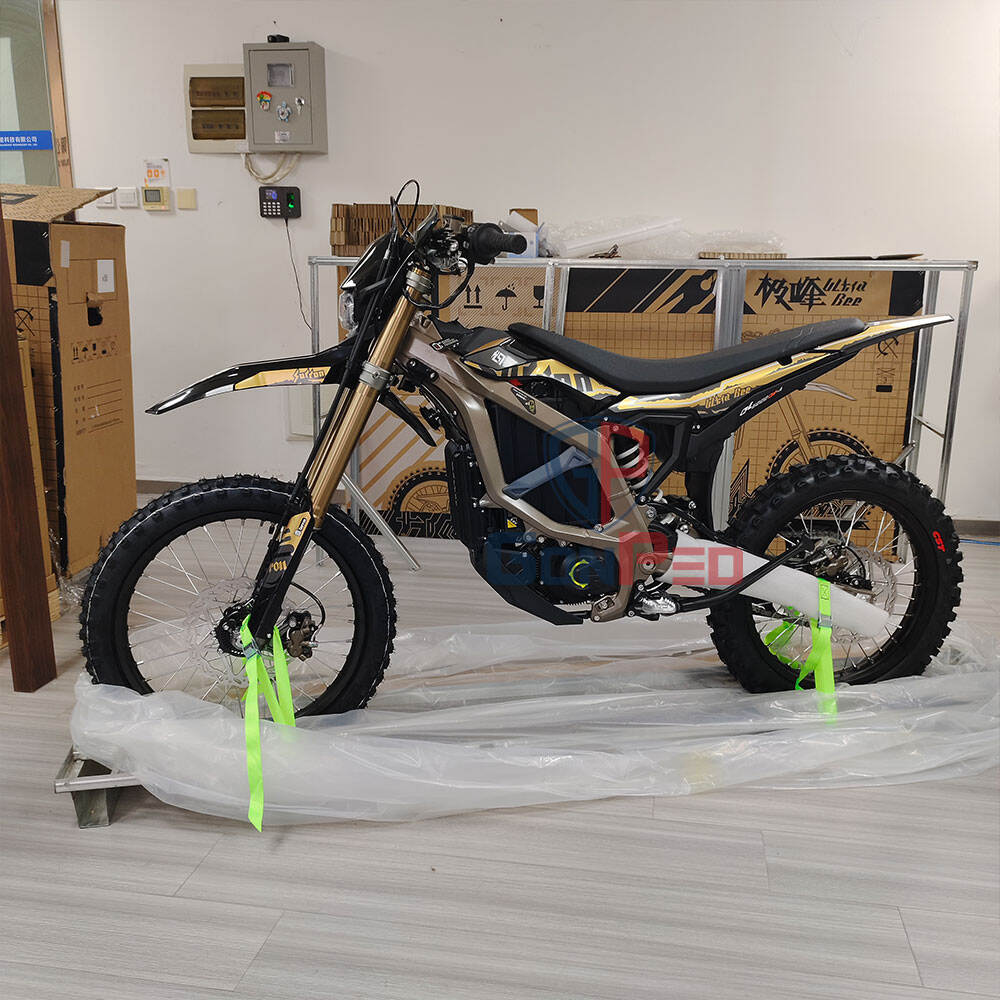
Electric motorcycles have revolutionized off-road riding, and the Surron Ultra Bee stands as a prime example of engineering excellence designed for challenging terrain. When tackling steep inclines and demanding hill climbs, the relationship between motor torque delivery and terrain performance becomes critically important. The Surron Ultra Bee torque curve has been specifically engineered to provide riders with exceptional climbing capability, transforming how electric motorcycles handle vertical challenges that would overwhelm traditional combustion engines and poorly optimized electric powertrains.
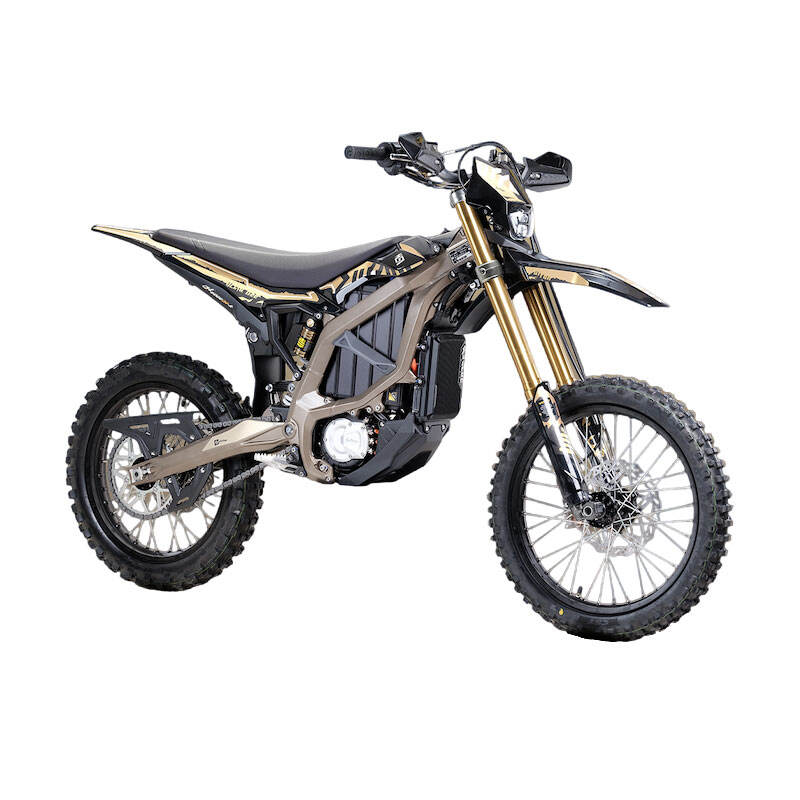
Understanding why the Surron Ultra Bee torque curve delivers such pronounced advantages during hill climbing requires examining the fundamental physics of electric motor operation, the specific characteristics of the Ultra Bee's powertrain architecture, and how these elements combine to create optimal force delivery exactly when riders need it most. This article explores the engineering principles, practical applications, and real-world performance benefits that make this electric motorcycle exceptionally capable on steep gradients and technical climbing sections.
The Physics Behind Torque Delivery and Hill Climbing Performance
Understanding Torque Requirements for Uphill Acceleration
Hill climbing places unique demands on any vehicle's powertrain that differ fundamentally from flat-terrain operation. When a motorcycle ascends an incline, it must overcome not only rolling resistance and air drag but also the gravitational force component acting parallel to the slope. This gravitational resistance increases proportionally with both the vehicle's mass and the steepness of the gradient, requiring substantially higher torque output to maintain forward momentum. The Surron Ultra Bee torque curve addresses this challenge through instantaneous torque availability across a broad RPM range, eliminating the power lag that handicaps combustion engines at low speeds.
Traditional internal combustion engines produce torque through controlled explosions in cylinders, creating power delivery that varies dramatically with engine speed. These engines typically generate peak torque only within a narrow RPM band, often requiring riders to maintain high engine speeds or downshift repeatedly during climbs. Electric motors operate on entirely different principles, with the Surron Ultra Bee's brushless permanent magnet motor delivering maximum torque from zero RPM. This fundamental characteristic means riders experience full climbing power the instant they rotate the throttle, regardless of current speed or gear selection.
The mathematical relationship between torque, power, and climbing ability reveals why the Surron Ultra Bee torque curve configuration proves so effective. Climbing force equals the torque at the rear wheel divided by the wheel radius, while the power required increases linearly with both gradient steepness and riding speed. By maintaining high torque output across the entire usable speed range, the Ultra Bee provides riders with consistent climbing force whether navigating technical rock gardens at walking pace or charging up fire roads at higher velocities.
Electric Motor Advantages in Low-Speed Torque Production
The brushless DC motor architecture employed in the Surron Ultra Bee torque curve design delivers inherent advantages for hill climbing applications that stem from electromagnetic principles. Unlike combustion engines that require minimum operating speeds to maintain combustion stability, electric motors generate rotational force through the interaction between permanent magnets and electromagnetically controlled stator windings. This interaction produces maximum torque at zero speed, creating the instant pulling power that transforms technical climbing performance.
The controller electronics managing the Ultra Bee's motor optimize current delivery to maximize torque production across different operating conditions. During hill climbs, when riders demand maximum acceleration against steep gradients, the controller increases current flow to the motor windings up to thermal and electrical limits. This electronic torque management happens in milliseconds, providing seamless power delivery that responds precisely to throttle input without the mechanical delays inherent in clutch engagement, transmission shifting, or engine speed changes.
Thermal characteristics also favor electric motor performance during extended climbing sessions. While the Surron Ultra Bee torque curve does experience some reduction under sustained high-load conditions as temperatures rise, modern battery and motor thermal management systems maintain consistent performance far longer than combustion engines struggling with heat-related power loss, vapor lock, or cooling system limitations on prolonged climbs.
Surron Ultra Bee Powertrain Architecture and Torque Characteristics
Motor Specifications and Power Delivery Profile
The Ultra Bee employs a high-performance brushless motor rated at 21 kilowatts continuous power, with peak output capabilities significantly higher during brief acceleration events typical of technical climbing. This motor configuration generates approximately 520 Newton-meters of torque at the rear wheel through the integrated reduction gearing, providing pulling force that rivals or exceeds much larger displacement combustion motorcycles. The Surron Ultra Bee torque curve maintains over 90 percent of peak torque from zero to approximately 80 percent of maximum motor speed, creating an exceptionally flat and broad power band ideally suited for variable-speed climbing scenarios.
This flat torque delivery contrasts sharply with combustion engine power curves that typically show torque rising gradually from idle, peaking in the mid-range, then falling off at high RPM. The practical implication for hill climbing becomes immediately apparent when riders encounter obstacles or traction challenges mid-climb. If speed drops suddenly due to a rock step or loose surface, the Surron Ultra Bee torque curve ensures full climbing power remains available without downshifting or clutch modulation, allowing riders to maintain momentum through technical sections that would stall conventional motorcycles.
The 72-volt battery system feeding this motor provides sufficient current capacity to sustain high torque output during demanding climbs without voltage sag that would reduce available power. Modern lithium battery technology delivers consistent voltage under load, ensuring the Surron Ultra Bee torque curve characteristics remain stable throughout most of the battery's charge range, only showing noticeable reduction in the final 10-15 percent of capacity.
Gear Reduction and Final Drive Optimization
The mechanical torque multiplication system in the Ultra Bee plays a crucial role in translating motor output into climbing capability. The integrated gear reduction multiplies the motor's inherent torque by a fixed ratio optimized for off-road performance, balancing maximum climbing force against reasonable top speed. This fixed-gear approach eliminates the complexity, weight, and efficiency losses of multi-speed transmissions while capitalizing on the electric motor's broad torque band to cover the entire useful speed range.
Engineering analysis of the Surron Ultra Bee torque curve reveals that the selected gear ratio places peak torque availability precisely where off-road climbing demands it most—in the 5 to 25 kilometer per hour range where technical hill climbs typically occur. This optimization means riders experience maximum pulling force during slow-speed rock crawling, steep switchback navigation, and obstacle negotiation, rather than at higher speeds where aerodynamic drag becomes the limiting factor and raw torque provides diminishing returns.
The direct-drive nature of this system also contributes to climbing efficiency by eliminating parasitic losses through clutch slip, gear mesh friction, and shift shock. Every watt of electrical energy converted to mechanical torque reaches the rear wheel with minimal loss, maximizing the climbing work extracted from each unit of battery capacity—a critical consideration during long rides with multiple elevation gains.
Battery Current Delivery and Sustained Power Capability
The 72-volt, 60 ampere-hour battery pack in the Ultra Bee provides both the energy capacity for extended riding and the current delivery capability for sustained high-torque climbing. Modern lithium cell chemistry can safely deliver continuous discharge rates of 2-3C (120-180 amperes continuous for a 60Ah pack), providing ample current to maintain full torque output during extended climbs without voltage collapse or thermal limitations that would flatten the Surron Ultra Bee torque curve.
This high current capability proves essential during real-world hill climbing because steep gradients demand sustained high power rather than brief bursts. A challenging mile-long climb at 15-degree average gradient might require 8-12 kilowatts of continuous power for several minutes, translating to 110-165 amperes of battery current. The Ultra Bee's battery system handles these demands while maintaining voltage stability, ensuring the torque curve remains consistent throughout the climb rather than sagging as less capable battery packs would.
Real-World Hill Climbing Performance Advantages
Technical Terrain and Obstacle Negotiation
The practical benefits of the Surron Ultra Bee torque curve become most apparent when riders tackle technical climbing sections featuring rocks, roots, loose surfaces, and sudden gradient changes. In these environments, maintaining momentum proves challenging because traction varies constantly and forward speed fluctuates with each obstacle. The instant torque response of the electric powertrain allows riders to precisely modulate power delivery, adding just enough torque to lift the front wheel over a rock step or surge through a loose gravel section without the throttle lag that causes combustion-powered bikes to stall or spin wheels uncontrollably.
This precise control extends to situations where riders must reduce speed dramatically mid-climb to navigate tight switchbacks or assess line choice. With the Surron Ultra Bee torque curve maintaining full torque at near-zero speed, riders can slow to walking pace for technical moves, then accelerate immediately without clutch slip or stalling risk. This capability fundamentally changes climbing strategy, allowing more conservative approach speeds and mid-climb corrections that would be impossible on motorcycles requiring minimum RPM to maintain power.
Professional riders testing the Ultra Bee on extreme terrain report that the torque delivery characteristics reduce physical fatigue during long climbing sessions by eliminating the constant clutch modulation, gear selection, and throttle anticipation required on conventional motorcycles. The simplified control interface—just throttle and brakes—lets riders focus cognitive resources on line choice and balance rather than powertrain management, improving both safety and performance on demanding climbs.
Gradient Capability and Climbing Efficiency
Quantitative testing reveals that the Surron Ultra Bee torque curve enables sustained climbing on gradients exceeding 30 degrees when traction permits, with brief sections approaching 40 degrees possible depending on surface conditions and rider technique. These capabilities stem directly from the high torque multiplication and instant availability across the motor's operating range, providing climbing force that exceeds the traction limits of most tire and surface combinations before reaching the powertrain's torque limits.
Energy efficiency during climbing also benefits from the torque curve characteristics because the motor operates continuously near its peak efficiency zone rather than cycling between low-efficiency high-RPM operation and engine braking as combustion motorcycles do during gear changes. The Surron Ultra Bee torque curve allows the motor to spin at optimal electrical efficiency throughout most climbing scenarios, extracting maximum elevation gain from each kilowatt-hour of battery capacity—typically 40-60 meters of vertical climbing per kilowatt-hour depending on total system weight and gradient steepness.
This efficiency advantage compounds over full riding sessions because riders can complete climbs with less energy consumption, preserving battery capacity for additional elevation gain or extending overall range. Field testing shows that the Ultra Bee typically requires 15-25 percent less energy than electric motorcycles with less optimized torque curves to complete identical climbing routes, directly attributable to the sustained high-torque, moderate-speed operation enabled by the powertrain design.
Traction Management and Wheel Spin Control
The electronic throttle control integrated with the Surron Ultra Bee torque curve delivery system provides sophisticated traction management that enhances climbing performance on loose or slippery surfaces. Unlike cable-actuated throttles that deliver torque proportional to grip rotation, the electronic system allows programming of throttle response curves that moderate torque application during initial throttle opening, reducing the likelihood of abrupt wheel spin that breaks traction and halts climbing progress.
Riders can adjust throttle mapping through controller settings to match surface conditions, selecting aggressive maps for hard-packed surfaces with good traction or gentler maps for loose rock, sand, or mud where progressive torque application prevents wheel spin. This adaptability allows the same motorcycle to excel across diverse climbing environments without hardware modifications, simply by optimizing how the available torque reaches the rear wheel.
The instant torque reversibility of electric motors also contributes to climbing control by providing immediate engine braking the moment throttle closes. This responsiveness helps riders modulate speed on steep descents between climbing sections and enables precise speed control during technical climbing moves where balancing forward momentum against obstacle negotiation requires constant throttle adjustment.
Comparative Analysis With Alternative Powertrain Configurations
Electric Versus Combustion Engine Torque Delivery
Comparing the Surron Ultra Bee torque curve against typical combustion engine power delivery reveals fundamental differences that explain the electric motorcycle's climbing advantages. A 250cc four-stroke engine—common in off-road motorcycles of similar weight—might produce 20-25 Newton-meters of torque at the crankshaft, multiplied through a five or six-speed transmission and final drive to perhaps 250-400 Newton-meters at the rear wheel depending on gear selection. However, this torque reaches peak output only within a narrow 6,000-9,000 RPM range, requiring riders to maintain high engine speeds or downshift frequently during climbs.
The practical consequence appears most dramatically during slow-speed technical climbing where combustion engines operate far below their torque peak. At 2,000-3,000 RPM typical for rock crawling, these engines produce perhaps 50-60 percent of peak torque, forcing riders to slip the clutch continuously to prevent stalling while sacrificing both control precision and mechanical efficiency. The Surron Ultra Bee torque curve eliminates this compromise entirely, delivering 100 percent of available torque at any speed including zero, transforming technical climbing from a constant battle against stalling into a fluid exercise in line choice and balance.
Thermal considerations further favor electric powertrains during extended climbing. Combustion engines generate substantial waste heat that must be dissipated through coolant systems or air cooling, with climbing's slow speeds reducing cooling airflow and increasing overheating risk during long ascents. Electric motors convert 85-92 percent of electrical energy directly to mechanical work with far less waste heat, and the remaining heat dissipates effectively even at low speeds through the motor housing's large surface area.
Torque Curve Comparison Across Electric Motorcycle Designs
Not all electric motorcycles deliver the flat, broad torque curves that benefit hill climbing, making the Surron Ultra Bee torque curve characteristics particularly noteworthy within the electric motorcycle category. Some electric designs prioritize top speed over low-speed torque, using taller gearing that reduces torque multiplication at the wheel in favor of higher maximum velocity. These motorcycles may struggle on steep technical climbs despite having similar motor power ratings because their torque delivery peaks at higher speeds less relevant to climbing scenarios.
Other electric motorcycles employ multi-speed transmissions attempting to combine broad speed range with optimal torque delivery at all speeds. While theoretically advantageous, these systems add weight, complexity, mechanical losses, and shift delays that often negate their theoretical benefits. The Surron Ultra Bee's single-speed approach with gear ratio specifically optimized for off-road use delivers superior real-world climbing performance by maximizing torque exactly where riders need it without compromise.
Controller programming philosophy also differentiates electric motorcycle torque delivery characteristics. Some systems prioritize battery longevity and range by limiting maximum current draw, which flattens the torque curve but reduces peak climbing capability. The Ultra Bee balances these concerns by allowing full torque output when demanded while incorporating thermal protection that gradually reduces power only when sustained operation approaches component temperature limits—a compromise that provides maximum climbing performance without risking damage during normal use.
Practical Considerations for Maximizing Climbing Performance
Rider Technique and Throttle Control
Extracting maximum benefit from the Surron Ultra Bee torque curve during hill climbs requires understanding how to apply the available power effectively. Unlike combustion motorcycles where riders must anticipate power delivery and preemptively build RPM before demanding acceleration, the instant torque response of the Ultra Bee rewards reactive throttle control that adds power precisely when needed. This approach reduces energy consumption and improves traction by avoiding unnecessary wheel spin from excessive throttle anticipation.
Body positioning significantly influences climbing success by managing weight distribution and traction. On steep climbs, riders should shift weight forward to prevent front wheel lift while maintaining enough rear wheel loading for traction. The Surron Ultra Bee torque curve provides sufficient pulling force to lift the front wheel easily if riders don't counterbalance with proper positioning, making technique even more critical than on lower-torque motorcycles where power limits prevent inadvertent wheelies.
Momentum management represents another key technique element because the flat torque curve allows riders to vary speed substantially mid-climb without losing climbing capability. Rather than committing to high-speed momentum runs that risk losing control, riders can approach climbs conservatively, slow for obstacles, then accelerate through difficult sections using the instantly available torque—a strategy that improves both safety and success rates on challenging terrain.
Terrain Assessment and Line Selection
The capabilities enabled by the Surron Ultra Bee torque curve change optimal line selection strategies during hill climbs. With instant torque and no stalling concerns, riders can choose tighter, more technical lines that minimize exposure to loose surfaces or dangerous fall lines, even if these lines require frequent speed changes and precise throttle modulation. The powertrain's forgiveness regarding speed variation makes previously impractical lines viable.
Surface traction assessment becomes the primary limiting factor rather than power availability. The Ultra Bee delivers sufficient torque to overwhelm traction on most surfaces, shifting the climbing challenge from power management to traction preservation. Riders should evaluate surface composition, moisture content, and grade angle to select lines that maximize traction rather than worrying about maintaining momentum or gear selection as they would on combustion motorcycles.
Obstacle approach speed optimization also differs because the Surron Ultra Bee torque curve eliminates penalties for approaching obstacles at lower speeds. Riders can slow to carefully assess rock steps, ledges, or ruts, then accelerate precisely when ready rather than maintaining higher speeds to prevent falling below the combustion engine's torque range. This capability particularly benefits less experienced riders who need more time to evaluate technical features before committing to maneuvers.
Battery Management During Climbing Sessions
While the Surron Ultra Bee torque curve remains relatively flat across most of the battery's charge range, riders should understand how state of charge affects climbing capability during extended sessions. Maximum torque output remains available down to approximately 20 percent state of charge, below which the battery management system begins reducing power to protect cells from over-discharge. Planning climbing routes to avoid critically low battery states on difficult sections ensures full performance remains available when needed most.
Cold weather affects battery performance and consequently the available torque during climbs. Lithium batteries deliver reduced current capacity when cold, potentially limiting the sustained high-torque output needed for extended steep climbs. Riders in cold environments should allow batteries to warm through moderate riding before attempting maximum-demand climbs, or use insulated battery bags to maintain operating temperature during winter sessions.
Energy budgeting for climbing-intensive routes requires understanding that elevation gain consumes substantially more energy than equivalent flat-terrain distance. As a planning guideline, riders can estimate approximately 15-20 watt-hours per meter of elevation gain including approach and descent energy, allowing route planning that ensures sufficient battery capacity remains for intended climbs plus reserve for unexpected detours or difficulty.
FAQ
How does the Surron Ultra Bee torque curve compare to traditional dirt bikes on steep climbs?
The Surron Ultra Bee torque curve delivers maximum torque from zero RPM, providing instant pulling power at any speed without requiring downshifts or high engine RPM like combustion dirt bikes. This means riders can tackle steep technical climbs at walking pace with full power available, eliminate clutch slipping that combustion bikes require at low speeds, and vary speed dramatically mid-climb without losing climbing capability. Traditional dirt bikes produce peak torque only in narrow RPM ranges, forcing riders to maintain specific engine speeds or shift gears frequently during climbs, making the Ultra Bee significantly more controllable and less fatiguing on demanding technical terrain.
Does the torque curve remain consistent throughout the battery's charge range?
The Surron Ultra Bee torque curve remains remarkably consistent from 100 percent charge down to approximately 20-25 percent state of charge, with riders experiencing essentially identical climbing performance throughout most riding sessions. Below 20 percent charge, the battery management system gradually reduces maximum current output to protect cells, which moderately decreases available torque during maximum-demand situations like steep climbs. However, the reduction occurs progressively rather than abruptly, and the motorcycle retains substantial climbing capability even at low battery states, just with reduced peak performance compared to fully charged operation.
Can riders adjust the torque delivery characteristics for different climbing conditions?
Yes, the Surron Ultra Bee's electronic throttle control system allows riders to select different throttle response maps that modify how torque is applied relative to throttle position. Aggressive maps provide immediate full-torque response for hard-packed surfaces with excellent traction, while gentler maps moderate initial torque application to prevent wheel spin on loose, sandy, or muddy surfaces. Some controller systems also allow custom programming of throttle curves, enabling riders to precisely tailor torque delivery to specific terrain conditions or personal preference. These adjustments don't change the motor's fundamental torque curve but modify how riders access that torque through throttle input, providing valuable adaptability for varying climbing environments.
What are the primary limitations of the Surron Ultra Bee torque curve for hill climbing?
The main limitation isn't the torque curve itself but rather traction availability—the Ultra Bee produces sufficient torque to overwhelm tire grip on most surfaces before reaching powertrain limits. Extremely steep climbs exceeding 35-40 degrees become limited by the motorcycle's geometry and weight distribution causing front wheel lift rather than inadequate torque. Extended high-power climbing in hot ambient conditions may trigger thermal protection that temporarily reduces power output, though this rarely occurs during normal riding. Battery capacity represents the ultimate constraint on total elevation gain possible in a single session, though this relates more to energy storage than torque delivery characteristics. The fixed-gear design means riders cannot optimize gearing for specific climbs as they could with multi-speed transmissions, though the broad flat torque curve largely eliminates any practical disadvantage from this limitation.
Table of Contents
- The Physics Behind Torque Delivery and Hill Climbing Performance
- Surron Ultra Bee Powertrain Architecture and Torque Characteristics
- Real-World Hill Climbing Performance Advantages
- Comparative Analysis With Alternative Powertrain Configurations
- Practical Considerations for Maximizing Climbing Performance
-
FAQ
- How does the Surron Ultra Bee torque curve compare to traditional dirt bikes on steep climbs?
- Does the torque curve remain consistent throughout the battery's charge range?
- Can riders adjust the torque delivery characteristics for different climbing conditions?
- What are the primary limitations of the Surron Ultra Bee torque curve for hill climbing?